| |
| Tom Bradley |
|
Tom Bradley was an American politician, five-term
mayor of Los Angeles, California, and three-term
Los Angeles city councilman.
He was the first African-American mayor of
Los Angeles, one of the first black Los Angeles
city councilmen, one of the first African-Americans
to serve as mayor of a major U.S. city, and the
first African-American mayor of a predominantly
white city.
|
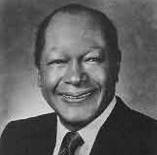 Mayor Tom Bradley Mayor Tom Bradley |
| |
| | Biographical fast facts | |
Date and place of birth: December 29, 1917,
near Calvert, Texas, U.S.A.
Date, time, place and cause of death: September 29, 1998,
at approximately 9 a.m., Kaiser Permanente West Los Angeles Medical Center,
6041 Cadillac Avenue, Los Angeles, California, U.S.A. (Heart attack)
Marriage
Wife: Ethel May Arnold (m. May 4, 1941 - September 29, 1998) (his death)
Family/Relatives
Siblings: Lawrence, Willa Mae, Ellis, and Howard
Children
Daughters: Lorraine Bradley and Phyllis Bradley
Note: They also had a daughter who died the day she was born.
Parents
Father: Lee Thomas Bradley (a porter for the Santa Fe railroad)
Mother: Crenner (Hawkins) Bradley (a maid)
Burial site: Inglewood Park Cemetery, Inglewood, California, U.S.A.
| |
| | Biography | |
Tom Bradley was born to poor sharecroppers who
lived in a small log cabin outside Calvert, Texas.
His grandfather had been a slave. The Bradley's
arrived in Los Angeles in 1924, and lived near
Temple and Alvarado streets. The family consisted
of father Lee Thomas Bradley, mother Crenner
(Hawkins) Bradley, Tom and his siblings, Lawrence,
Willa Mae, Ellis, who had cerebral palsy, and
Howard. Tom attended Rosemont Elementary School
and Lafayette Junior High School, and was a
standout athlete in high school.
He received an athletic scholarship to the
University of California at Los Angeles where
he distinguished himself on the Bruin track
team. After placing near the top on a Los Angeles
Police Department recruitment exam during his
junior year at UCLA, Bradley decided to drop
out of college, and entered the L.A. Police
Academy. During his time on the force, he
worked as a detective, a juvenile officer, and
in police-community relations. Toward the end
of his career in law enforcement, he was not
only working full-time with the LAPD, but
was going to night school to earn his law
degree from Southwestern University. He actually
graduated and passed the California bar exam
while still on the police force. Following
21 years of service (1940-61), Lieutenant
Tom Bradley retired from the LAPD.
After a brief period practicing law, he was
urged by community leaders to run for a seat
on the Los Angeles City Council. He won, and
went on to serve three terms on the L.A. city
council (1963-73). In the Los Angeles mayoral
election of 1969, Bradley challenged outspoken
incumbent Mayor Sam Yorty. Tom Bradley lost his
bid for the city's highest office in what
turned into a bitter campaign. With the Watts'
riots still fresh in the minds of many Los Angeles
residents, all it took to swing the election
Sam Yorty's way were a few leaked files that
implied Bradley was a left-wing radical with
communist leanings. Four years later, Tom
Bradley would successfully unseat Mayor Yorty.
At a time when the city was only 18 percent
African-American, Bradley forged a broad-based
coalition of liberals and moderates to win
the election.
As the 37th mayor of Los Angeles, Bradley
presided over a period of enormous growth
in Los Angeles. The city emerged as a
world-class metropolis that took its place
as an international trade center. Mayor Bradley
remained such a well-respected figure among
the electorate, that he would go on to serve
an unprecedented five-terms in office (1973-93).
During his tenure, the city surpassed Chicago
to become the second-largest city in the
United States. He oversaw a massive downtown
redevelopment project that successfully
revitalized much of the formerly rundown,
seedy downtown area. Perhaps his most visible
legacies remain the Los Angeles subway system
and light-rail mass transit system. Improving
and expanding public transportation was one
of his earliest campaign promises.
Some dubbed him the Teflon mayor, or "Teflon Tom"
for his seeming ability to avoid being touched
by any serious scandal. All that changed in
the waning years of his political career, when
he found himself defending his integrity, as
scandals erupted over some questionable financial
dealings, and possible financial conflict-of-interest
charges. Investigations revealed that Bradley
had been paid to serve on the board of advisors
of a bank and the board of directors of a savings
and loan association, both of which had dealings
with the city. Those disclosures led to wider
investigations into his personal finances.
Inquiries exposed the mayor's secret acceptance
of a consultancy from a Los Angeles bank, who
in turn, received an unexplained two million
dollars from the city. Although no proof of
criminal wrongdoing was found, the report
criticized the mayor on ethical grounds and
for his poor judgment in the matter.
Following the 1992 Rodney King riots, Mayor
Tom Bradley announced he would not seek
reelection. After leaving office, he joined
the Los Angeles office of Brobeck, Phleger & Harrison.
The former mayor worked on international
trade issues for the firm.
In March 1996, Bradley suffered a heart attack
that led to triple bypass surgery. Following
the surgery, he suffered a stroke that left
him partially paralyzed and unable to speak.
Friends report he later regained most of his
mobility but never regained his ability to speak.
Tom Bradley was married to Ethel (Arnold) Bradley
for 57 years. They had two daughters, Lorraine
and Phyllis.
| |
| |
If you find the above data useful, please
link to this page from your webpage, blog or
website. You can also help support
Internet Accuracy Project's work by contributing
surplus office supplies, or used books.
Alternatively, consider recommending us to
your friends and colleagues. Thank you in
advance! | |
Copyright © 2005-2012 INTERNET ACCURACY PROJECT. All rights reserved. All
content, is the exclusive property of Internet Accuracy Project
and may not be reproduced (on the Web, in print, or otherwise)
without the express written permission of our organization.
BY ACCESSING THIS SITE YOU ARE STATING THAT YOU AGREE TO
BE BOUND BY OUR TERMS AND CONDITIONS
regardless of whether you reside in the United States of
America or not. Our Privacy Policy.
This page was last updated January 1, 2012.
| |
| |
